

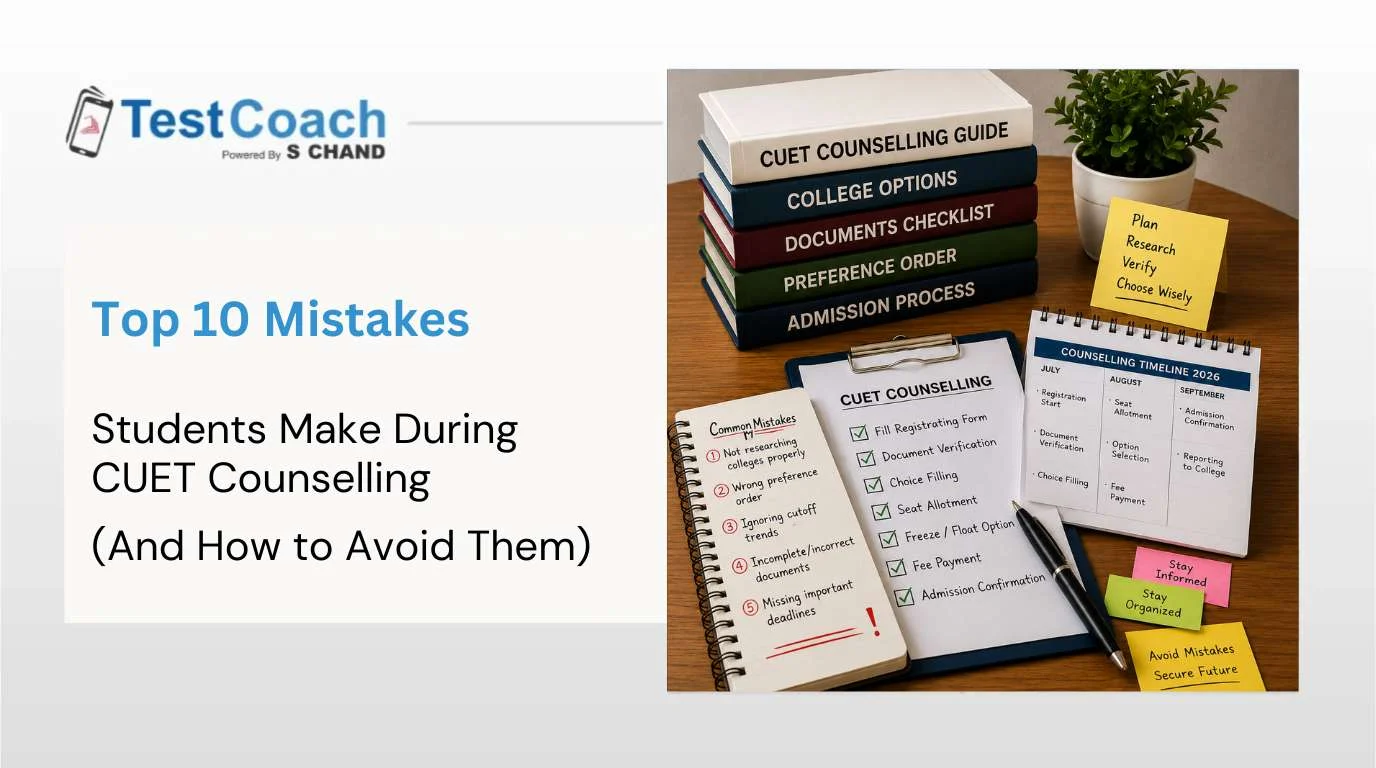
Every year, thousands of students clear the CUET exam with competitive scores but still fail to secure admission to their preferred college.
Surprisingly, the reason isn’t always a low score. More often, it’s avoidable mistakes during the counselling process—missing deadlines, choosing the wrong preferences, uploading incorrect documents, or misunderstanding the admission rules.
The good news? Most of these mistakes are easy to avoid if you know what to watch out for.
Here’s a list of the 10 most common CUET counselling mistakes and practical tips to ensure your admission journey goes smoothly.
1. Waiting Until the Last Day to Register
Many students postpone counselling registration, assuming they have plenty of time.
However, admission portals often experience heavy traffic near the deadline, which can lead to login issues or incomplete submissions.
How to Avoid It
- Register as soon as the counselling portal opens.
- Save your application after every step.
- Keep payment receipts and confirmation emails.
Remember: Early registration gives you time to fix any unexpected issues.
2. Filling College Preferences Without Research
Some students choose colleges based only on popularity or recommendations from friends.
A poorly planned preference list can reduce your chances of getting a suitable college or course.
How to Avoid It
Before filling preferences, compare:
- Previous admission trends
- Course curriculum
- Faculty
- Placements
- Campus facilities
- Location
A balanced preference list usually performs better than chasing only the most competitive colleges.
3. Choosing Too Few Colleges
Many candidates apply only to five or six colleges because they are confident about their scores.
If competition is higher than expected, they may miss admission altogether.
How to Avoid It
Include a mix of:
- Dream colleges
- Target colleges
- Safe options
More eligible preferences generally increase your admission opportunities.
4. Ignoring Eligibility Criteria
A good CUET score doesn’t automatically make you eligible for every course.
Each university has its own subject requirements and admission rules.
How to Avoid It
Read the official eligibility criteria carefully before applying.
Applying for ineligible courses wastes valuable counselling opportunities.
5. Uploading Incorrect Documents
One blurred document or incorrect certificate can delay your admission.
Common issues include:
- Unclear scanned copies
- Expired category certificates
- Incorrect file formats
- Name mismatches
How to Avoid It
Before uploading:
✔ Check every document.
✔ Keep PDFs properly named.
✔ Verify that all details match your academic records.
6. Missing Seat Acceptance Deadlines
Getting a seat is only half the process.
Some students forget to accept their allotted seat or pay the admission fee before the deadline.
As a result, the university may cancel their admission.
How to Avoid It
Set reminders for:
- Seat acceptance
- Document verification
- Fee payment
- Upgrade deadlines
Never rely solely on memory.
7. Ignoring Later Counselling Rounds
Many candidates believe that if they don’t get a seat in the first round, the admission process is over.
That’s rarely true.
Several universities conduct:
- Second rounds
- Third rounds
- Upgrade rounds
- Spot admissions
How to Avoid It
Continue checking the admission portal even if you don’t receive a seat initially.
Many students secure admissions in later rounds.
8. Depending on Social Media for Updates
WhatsApp groups, Telegram channels, and Instagram pages often circulate unverified admission news.
Following incorrect information can lead to confusion and missed deadlines.
How to Avoid It
Always verify updates through:
- Official university websites
- Official admission portals
- University notices
Treat unofficial sources only as discussion platforms—not as the final authority.
9. Not Keeping Backup Options
It’s natural to dream about top colleges, but limiting yourself to just one university can be risky.
How to Avoid It
Apply to multiple participating universities if you’re eligible.
Having backup options gives you greater flexibility during counselling and improves your overall admission prospects.
10. Panicking After the First Result
One rejected preference doesn’t mean the end of your admission journey.
Seat movements happen regularly because students:
- Withdraw admissions.
- Upgrade to better colleges.
- Decline allotted seats.
This creates opportunities in subsequent rounds.
How to Avoid It
Stay patient.
Monitor every counselling round and respond promptly whenever a new opportunity becomes available.
Quick Checklist Before CUET Counselling
Use this checklist before the admission process begins:
✅ Download your CUET scorecard.
✅ Keep original and scanned documents ready.
✅ Research colleges and courses.
✅ Prepare a balanced preference list.
✅ Read university admission guidelines.
✅ Track counselling dates.
✅ Save important deadlines.
✅ Check your email regularly.
Completing these simple tasks can help you avoid most counselling-related issues.
Final Thoughts
CUET counselling is more than just filling an online form. It requires careful planning, timely action, and attention to detail.
Many students lose valuable admission opportunities because of small mistakes that could have been prevented. By staying organized, following official university guidelines, and keeping track of deadlines, you can complete the counselling process with confidence.
A good CUET score creates opportunities—but making informed decisions during counselling is what turns those opportunities into admissions.
Frequently Asked Questions (FAQs)
1. What is the biggest mistake students make during CUET counselling?
The most common mistake is missing counselling registration or seat acceptance deadlines. Once the deadline passes, admission opportunities may be lost.
2. Can I change my college preferences after submitting them?
It depends on the university. Many universities allow changes until the preference-locking deadline, after which modifications are generally not permitted.
3. Should I apply to multiple universities through CUET?
Yes. Applying to multiple eligible universities improves your chances of securing admission.
4. What happens if I miss the first seat allotment?
You may still be eligible for subsequent counselling or seat allotment rounds, depending on the university’s admission policy.
5. Is it safe to rely on social media for counselling updates?
No. Always confirm admission-related information through the official websites and counselling portals of the respective universities.
6. How can I improve my chances of getting admission?
Register early, fill a balanced preference list, keep all documents ready, follow official notifications, and participate in every eligible counselling round.
Start Your CUET 2026 & 12th Board Prep Now!